Families rarely make a straight-line decision about where an older adult should live. The conversations start with a handful of worries — missed medications, a fall, the car dented in the grocery lot — and build into a larger question about safety, dignity, and daily life. For many, assisted living sounds like the right midpoint between living at home and a nursing home. Sometimes, it is. Other times, especially when Alzheimer’s or another dementia enters the picture, memory care is the safer and more sustainable choice. Understanding the difference can spare months of struggle and several costly moves.
I have toured hundreds of communities, helped families through intake assessments, and sat with adult children after 2 a.m. phone calls from staff. The distinction between assisted living and memory care isn’t a branding nuance. It affects how your loved one spends each hour, how crises get handled, and whether they can stay in place as their needs change.
The fork in the road
Assisted living exists for people who need help with daily tasks but can still navigate their day with cues. Think bathing reminders, help managing pills, meals provided, housekeeping, and some activities. Residents usually live in apartments with lockable doors and can come and go. The building is designed for older adults but not specifically for cognitive impairment.
Memory care is built for people living with Alzheimer’s disease and other dementias. The environment is secured, the staffing model accounts for cognitive changes, and programming is designed to work with the brain as it is today, not as it was five years ago. When agitation spikes at sundown, a good memory care team has tools ready. When a resident tries to leave to “get home to the kids,” a staff member who knows her history can redirect with kindness, not confrontation.
Families often start in assisted living because it feels less restrictive. That can work for mild cognitive impairment or early-stage dementia. It can also backfire when disorientation, exit-seeking, or behaviors overwhelm a building that isn’t set up to handle them. The question isn’t “Which looks nicer?” but “Which supports the risks we actually have?”
How dementia changes the equation
People living with dementia don’t just forget names. They lose parts of executive function: sequencing steps, judging risk, filtering stimuli. I have watched a retired engineer whisper to me that he needed to “get down to the plant” while holding a fork midair, unsure what to do with it. He didn’t need someone to cook for him, he needed a simplified table setting, a plate with color contrast, and a staff member trained to cue him in short, calm phrases.
These details matter because they drive how senior care communities operate hour by hour. In assisted living, a resident may get a shower twice a week and medication set-up once a day, then mostly independent time. In memory care, the same resident might need two people to guide a shower safely, discreet continence support, routine checks every few hours, and a weekday schedule of short, repetitive activities. Assisted living staffing ratios and training rarely match that workload or specialization.
What assisted living does well
Assisted living can be an excellent fit when a person remains oriented most of the time and can follow routines with light prompting. I think of a widower in his late seventies, mild short-term memory loss after surgery, who kept falling behind on meals and laundry. Assisted living gave him a structured day, dining room companionship, and medication management. He thrived because the independence he still enjoyed wasn’t undercut by the tasks he could no longer manage well.
Assisted living also shines for mobility support that isn’t too heavy. A resident who needs standby assistance with a walker, or reminders to use grab bars, can do well. The emphasis is on preserving autonomy. Doors aren’t locked. Families can take loved ones out for a drive without passcodes and sign-outs. If the person still handles money, uses a phone appropriately, and doesn’t wander, assisted living often feels right.
Where assisted living struggles is predictable. If a resident begins leaving the apartment at 3 a.m., knocks on neighbors’ doors, hides food, or refuses care because they no longer recognize staff, the building’s model gets stretched. Staff respond as best they can, but the setting isn’t designed for those patterns.
What memory care is built to handle
Memory care communities, sometimes called special care units, start with design. Halls loop back instead of dead-end, courtyards are secured but open to the sky, and dining rooms minimize noise that can overwhelm. Shadow boxes by each door hold personal mementos that cue recognition better than numbers can. Color contrast on floors and plates helps depth perception. Lighting avoids glare at dusk, when confusion often peaks.
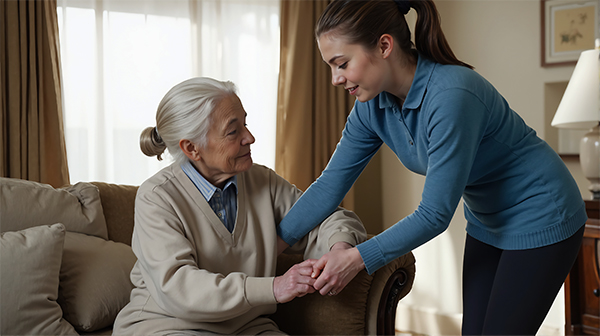
The care model is different too. Staff learn each resident’s life story and triggers. Mrs. K notes that she “never eats lunch” until someone mentions her years as a church hostess and asks for her help setting napkins. Mr. D refuses a shower until staff shift language to “spa time” and play his Big Band playlist. These aren’t gimmicks. They are practical, evidence-informed approaches that reduce distress without heavy sedation.
Crucially, memory care expects disease progression. Plans account for wandering, sundowning, hallucinations in Lewy body dementia, frontotemporal disinhibition, and the gradual loss of verbal ability. Good units use small-group programming timed to energy patterns: movement after breakfast, quieter tactile tasks midafternoon, and calming routines in early evening. Medication management is closer, with nurses monitoring psychoactive drugs, bowel regimens, and hydration, which can swing behavior more than people realize.
Red flags that point toward memory care
Families ask for a checklist. There isn’t a perfect one, but patterns persist. If several of these show up, assisted living may no longer be enough.
- Exit-seeking, wandering, or getting lost inside the building despite cues Increasing resistance to personal care that leads to missed showers or hygiene decline Unsafe behaviors like cooking at odd hours, leaving water running, or misusing appliances Distress in group dining or activities due to noise, visual overstimulation, or misunderstanding Repeated 911 calls, falls at night, or neighbor complaints about knocking and entering
One or two incidents can be managed with supportive services. A cluster over weeks suggests the environment isn’t matching the need.
Safety without feeling locked in
Families worry about the word “secured.” No one wants a loved one to feel imprisoned. The best memory care units strike a balance. They use discreet keypad exits, sometimes with camouflaged doors that don’t invite fixated attention. Residents move freely within the space and into enclosed gardens. Schedules are flexible, not institutional. A man who always walked after dinner can do that safely on a looping corridor or a patio path.
Contrast this with what happens when a person who wanders lives in standard assisted living. Staff may try to watch more closely, but every open exit becomes a risk. I have seen a resident slip out behind a visitor while the receptionist answered a phone call. He was found safe, but the hours of search and police involvement rattled everyone. After two elopements, the building rightly recommended memory care. That delayed move could have been avoided with an earlier pivot.
Staffing and training differences that matter
Ratios vary by state and operator, but memory care usually staffs higher than assisted living. You might see one caregiver for six to eight residents during the day, sometimes less, compared with one for 10 to 15 in assisted living. Overnight ratios widen in both, but memory care still tends to keep more eyes on the floor. More important than headcount is training. Memory care teams learn validation, redirection, and nonpharmacological approaches to behaviors. Done well, this reduces falls, fights, and chemical restraints.
Watch a meal in both settings. In assisted living, servers take orders and deliver plates. In memory care, staff sit at tables, prompt each bite, swap a fork for a spoon if fine motor skills falter, and monitor choking risk. This is labor-intensive. Trying to replicate it with ad hoc private caregivers in assisted living often exceeds the cost of memory care and still lacks the unit’s programming backbone.
Cost, contracts, and the math no one likes
Families often start with the price sheet, then reverse-engineer the decision. Assisted living base rates might look lower, but add levels of care for continence, transfers, and medication passes, and the bill climbs. Private duty aides can fill gaps, yet even four hours a day at market rates can add a few thousand dollars a month. Memory care quotes usually bundle higher staffing, environmental features, and programming. The monthly cost can range widely by region, but once behaviors and supervision needs increase, memory care often becomes cost-comparable or even less than assisted living plus add-ons.
Licensing rules matter too. Some assisted living buildings discharge when residents need two-person transfers, have frequent falls, or develop persistent exit-seeking. Memory care units are more likely to retain with hospice services, avoiding a disruptive late-stage move.
Ask specific questions during tours: What behaviors trigger a 30-day discharge notice? How many residents per caregiver on evenings and overnights? How is staff turnover? Are nurses on-site or on-call after hours? Vague answers today become emergencies later.
The role of respite care and trial stays
When a decision feels fraught, respite care can test the fit without committing long-term. Many communities offer furnished apartments for short stays, typically one to four weeks. For a person with dementia, a respite in memory care gives a realistic snapshot. The structure may look like a loss of independence on paper but feel calming in practice. Families often notice reduced agitation and better sleep after a few days of predictable routine and engagement.
Respite stays also reveal how a building handles intake. Do they gather a life history, favorite foods, past hobbies, and daily rhythms? Do they ask about triggers and comfort items? That upfront curiosity is a good proxy for how they will care on day 20, not just day one.
Medical nuance: not all dementias behave alike
Alzheimer’s disease is the most common, but I want to emphasize the diversity of neurocognitive disorders. Vascular dementia tends to step down in function after strokes; people may retain social graces while losing planning ability. Lewy body dementia brings visual hallucinations and dramatic fluctuations in alertness, with high sensitivity to certain antipsychotics. Frontotemporal dementia can preserve memory early while changing behavior, empathy, and language. Each profile calls for different strategies. Memory care teams accustomed to these patterns usually prevent more crises than general assisted living staff can.
Bring the neurologist’s notes to your tour. Ask whether the community has cared for residents with the same diagnosis and what adaptations they use. If they cannot describe specific approaches, keep looking.
When staying in assisted living can still work
An early-stage resident who is friendly, redirectable, and not a wander risk may remain in assisted living with extra supports. I’ve seen success when families coordinate:
- Daily check-ins at set times and use of a medication dispenser with alerts A meal plan that avoids buffet confusion, with staff-prepared plates Clear room setup: large-print labels, decluttered surfaces, and a simple clothing system A private caregiver during the late afternoon window if sundowning is an issue A written behavior plan shared with staff to guide consistent prompts and preferences
Even then, it is a bridge, not a forever plan. Reassess monthly, not yearly. If you start getting incident reports more than once every few weeks, or staff sound worried rather than collaborative, it is time to revisit memory care.
The emotional side families rarely say aloud
Adult children often feel guilty moving a parent behind a secured door, as if they are taking something essential away. I remind them that safety can restore the very things they hope to preserve. A former teacher who wandered into traffic in assisted living began attending poetry groups in memory care because anxiety no longer consumed her morning. A retired contractor, lost in a large building, relaxed when his world shrank to a warm, predictable unit where he could sand small blocks in the workshop nook. Constraint at the perimeter created freedom in the middle.
Another hard truth: multiple moves are disorienting for someone with dementia. Choosing assisted living as a “softer” first step can mean moving again in six months under duress. If memory care is the better fit, choosing it earlier reduces trauma for everyone.
How to evaluate communities like a pro
Tour twice, at different times. Mornings show routines; late afternoons reveal how staff handle the sundown window. Sit in common areas for 30 minutes. Do you hear residents’ names, calm voices, and laughter? Or overhead paging and rushed tones? Check the smell, yes, but also the temperature: too cold or hot creates agitation. Look at the activities calendar with skepticism. Are there photos or short videos of real participation, or just printed lists?
Ask to meet the executive director and the nurse. Stability matters. If the leadership team churns every few months, culture rarely sticks. Review the move-in assessment tool. Good assessments probe beyond diagnoses to practical details: Does music calm or irritate? Coffee after noon? Bath or shower preference? Family presence during the first week?
Finally, ask to see the care plan after the first 30 days. The best communities treat it as a living document that changes with the resident, not a binder to fulfill a regulation.
Planning for the long arc
Dementia can span years. As needs intensify, hospice support inside memory care often becomes the kindest path. Pain control, spiritual support, and caregiver presence shift the tone from rescue to comfort. Families sometimes worry that memory care plus hospice is duplicative. In practice, it blends daily structure with end-of-life expertise. A resident continues familiar routines while pain and symptom specialists manage the final stretch. This integrated model is hard to replicate in assisted living when behavior or mobility needs are high.
Financial planning should mirror this arc. If your family uses long-term care insurance, check benefit triggers and daily caps. Many policies require assistance with at least two activities of daily living or a documented cognitive impairment. Clarify whether the policy differentiates between assisted living and memory care. Veterans and surviving spouses may qualify for Aid and Attendance, though processing can take months. Medicaid coverage depends on state waivers and licensing; some memory care units accept it after a private-pay period, others never do. Ask early, not after the savings run low.
What a good day looks like in each setting
Picture breakfast. In assisted living, residents arrive on their own or with a reminder, order from a menu, and chat. A resident with early dementia might do fine, especially with a consistent table and a familiar server. Later, she might attend chair yoga, then return to her apartment to watch a favorite show.
In memory care, breakfast is seeded with cues. Staff greet residents by name, offer two choices at a time, and stay nearby to prompt bites. Afterward, the group gathers for a short movement circle and a reminiscence activity built around a theme, like gardening. Music plays softly, not a blaring TV. The day alternates activity with rest, designed to keep stimulation at a level that engages without overwhelming. If someone grows restless, a staff member might suggest a purposeful task: folding towels, watering a plant, delivering mail. Purpose threads through the day.
One model isn’t universally better. The right one matches abilities and risks so the person can have more good minutes strung together.
When a hospital stay forces the issue
Crises accelerate decisions. A fall, a urinary tract infection with delirium, or a medication change can expose how fragile a setup is. Hospitals often push for “safe discharge,” and assisted living may balk at readmitting if the resident now needs secured care. Have a backup plan before you need it. Identify two memory care communities with beds, know their intake process, and keep documents organized: ID, insurance cards, medication lists, power of attorney, and advance directives. If the crisis never comes, you lose nothing but a couple of afternoons touring. If it does, you beehivehomes.com elderly care avoid a frantic search.
The bottom line: choose for the brain you live with now
Families make their best decisions when they describe current reality, not who their loved one used to be. Assisted living is a supportive environment for seniors who need help with daily tasks and remain largely oriented. Memory care is a therapeutic environment for people whose cognitive changes affect safety, behavior, and the ability to navigate a typical building. Respite care can help you test the fit before committing.
If you are seeing wandering, mounting care refusal, safety risks in the apartment, or repeated episodes that frighten neighbors or staff, memory care is usually the right next step. It is not about giving up. It is about giving the person a space designed for how their brain processes the world now, with staff who meet them where they are. Done well, that change often brings steadier days, fewer crises, and more moments of connection — which is the goal of senior living, no matter the sign on the door.
BeeHive Homes Assisted Living
Address: 2395 H Rd, Grand Junction, CO 81505
Phone: (970) 628-3330